
What is Schneider Molded Case Circuit Breakers?
A schneider molded case circuit breakers is an electrical protection device that safeguards an electrical circuit from overloads and faults. You can employ it as the main switch in a circuit breaker panel, where it provides overcurrent protection for the entire system.An mccb interrupts current flow when it detects a fault or overcurrent condition. It is typically ul 489 listed, and csa certified, making it suitable for use in north america. Mccbs are available in various ratings, ranging from 30a to 6000a and higher. They are also available in different trip characteristics, such as instantaneous trip, short-time delay, long-time delay, or adjustable trip settings.
Advantages of Molded Case Circuit Breakers
Being moulded into a protective casing, mccbs are also more resistant to environmental influences like moisture and dust, which can shorten the lifespan of other circuit breakers. For the same reason, they are also more reliable. Because they are self-contained, there is less opportunity for moisture and dust to cause a failure by damaging the circuit breaker.
Mccbs are also less likely to trip accidentally, which can be frustrating and time-consuming. Also, mccb s provide high-current interrupter switches and are extremely easy to install on the panel.
Using an mccb can help protect all types of electrical circuits from short circuits, overloads, and power surges. This makes them suitable for securing anything from large industrial systems to small domestic appliances. Mccb can sense faults and secure the system from risky situations. It works as a protective and switching device for feeder circuits as well.
Mccbs can also be used to safely shut down any kind of system in the event of an emergency or an unexpected power failure. This makes them very useful in case of power outages or any other situation where quick action is needed to prevent damage or injury.
Many mccb s come with a reset feature that allows you to quickly restore the circuit after there has been a short-circuit or overload issue. This feature comes as a relief for those working in hazardous environments as it eliminates the need to constantly monitor the system and detect any potentially dangerous issues.
-

Schneider Motor Protection Circuit Breaker GV2ME08
Brand Name: Schneider. Production Name:EZC100N Circuit Breaker. Type: EZC100N3025. Poles: 3. Current: 25A. Shipping Method: DHL/ TNT/ FEDEX/ AIR/ OCEAN. Payment Method: Wire Transfer/ West Union/ Add to Inquiry -
Schneider Motor Protection Circuit Breaker GV2ME08
This test is similar to the IR test but is more commonly performed on medium- and high-voltage breakers. It entails passing a high DC voltage through an insulation system, stressing it, and exposing Add to Inquiry -
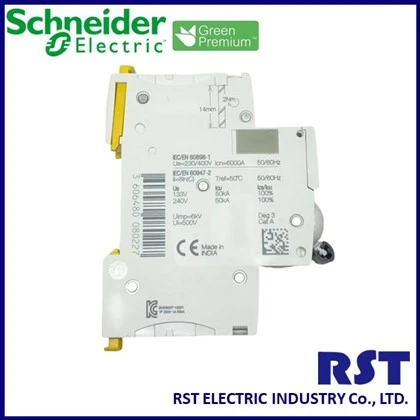
Schneider Miniature Circuit Breaker MCB A9F75204
Place of Origin: Thailand. Brand Name: Schneider. Model Number: A9F74206. Type: MINI Add to Inquiry -
Schneider Miniature Circuit Breaker MCB A9F74306
Place of Origin: Italy. Brand Name: Schneider. Model Number: A9F74140. Type: Magnetic Add to Inquiry -
Schneider Miniature Circuit Breaker MCB A9F74101
Place of Origin: Italy. Brand Name: Schneider. Model Number: A9F74140. Type: Magnetic Add to Inquiry -
Schneider NSX100N Circuit Breaker C10N3TM025
Place of Origin: FranceBrand Name: SchneiderModel Number: C10N3TM025Type: Circiut Breaker Add to Inquiry -
Schneider NSX100N Circuit Breaker C10N3TM040
Place of Origin: FranceBrand Name: SchneiderModel Number: C10N3TM040Type: Circiut Breaker Add to Inquiry -
Schneider NSX100N Circuit Breaker C10N3TM050
Place of Origin: FranceBrand Name: SchneiderModel Number: C10N3TM050Type: Circiut Breaker Add to Inquiry -
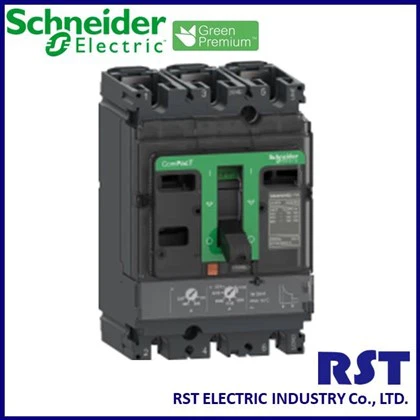
Schneider NSX160H Circuit Breaker LV430673
Place of Origin: France. Brand Name: Schneider. Model Number: LV430673. Type: Molded Case Add to Inquiry





Why Choose Us
Experienced
With 30 years' experience, RST has dedicated to provide total solution of Industrial Facilities, Business or Residential Buildings distributing energy saving, providing customers complete after sales consultation of one stop shopping, national operation and local service.
Quality
Our team takes great pride in delivering high-quality products and services to our clients. We strive to exceed expectations and always put our customers first. With electrical power resources as the core of development, we offer total solution to our clients, becoming their trustworthy partners.
Wide selection
We service and sell all major manufacturers so you aren't limited to any one brand, make or model. We are a main distributor of Schneider products, Merlin Gerin products, Telemecanique products, RTR Capacitors, ETI Power Fuses, VEI LBS, AREVA LBS, Shihlin Electric products, Mitsubish products, Delta products, Mean Well products and Sunon AC/DC Fans.
24/7 availability
No matter the time of day or night you call, you'll get the same prompt, cheerful service.
Specifications of Schneider Molded Case Circuit Breakers
A moulded plastic case houses the circuit breaker’s components. This offers an extra layer of protection for the breaker. The breaker has three main components—a trip unit, an operating mechanism, and an arc extinguisher.
The trip unit senses when there is an overcurrent or undercurrent. It compels the operating mechanism and arc extinguisher to work together and stop the flow of electricity. The operating mechanism opens and closes the contacts. It prevents the handle from affecting how quickly the contacts open or close. The arc extinguisher eliminates the arc, cutting off all electricity flow in the area.
Schneider molded case circuit breakers have several specifications and ratings that you can use to ensure that you get the right schneider molded case circuit breakers for your needs. Below are some of the most important.
Current rating
The current rating specifics the highest current the schneider molded case circuit breakers can continuously carry while maintaining safety. Schneider molded case circuit breakers can actually carry a little over the current rating, but only for limited time. Schneider molded case circuit breakers current ratings range from 10a-2500a. Matching the current rating with your machinery’s current should be your first consideration when choosing an schneider molded case circuit breakers.
Breaking capacity
The breaking capacity is the highest voltage an schneider molded case circuit breakers can interrupt without damaging equipment or the arc. Choose an schneider molded case circuit breakers with a high enough breaking capacity to manage your equipment.
Tripping characteristics
Schneider molded case circuit breakers allow you to adjust tripping characteristics to meet your needs. You can set the schneider molded case circuit breakers to trip at various overload currents.

Working Principle of Molded Case Circuit Breakers
The main contacts of low-voltage circuit breakers are manually operated or electrically closed. After the main contact is closed, the free trip mechanism locks the main contact in the closed position. The coil of the overcurrent release and the thermal element of the thermal release are connected in series with the main circuit, and the coil of the undervoltage release is connected in parallel with the power supply.
When the circuit is short-circuited or severely overloaded, the armature of the overcurrent release pulls in, causing the free tripping mechanism to act, and the main contact disconnects the main circuit.
When the circuit is overloaded, the thermal element of the thermal trip unit generates heat to bend the bimetallic strip, pushing the free trip mechanism to act, and the main contact disconnects the main circuit.
When the circuit is under-voltage, the armature of the under-voltage release is released, and the free trip mechanism is also activated, and the main contact disconnects the main circuit.
When the shunt trip button is pressed, the armature of the shunt trip unit pulls in, causing the free trip mechanism to act, and the main contact disconnects the main circuit.
Schneider Molded Case Circuit Breakers Components
Frame: The frame, also known as the molded case, provides an insulated housing to mount to mount all of the circuit breaker components. This will often be made of a glass-polyester material or thermoset composite resin that combines ruggedness and high dielectric strength in a compact design. A frame designation is assigned to each different type and size of molded case. This designation is used to describe the breaker's characteristics including maximum voltage and current ratings.
Operating mechanism: The operating mechanism handles the opening and closing of the contacts. The speed that the contacts open or close is independent of how fast the handle is moved. This is known as "quick-make, quick-break". The breaker cannot be prevented from tripping by holding the handle in the on position. This is known as "trip-free". The position of the handle indicates the status of the contacts - whether they are closed, open, or tripped. The handle will be in a midway position when the contacts are tripped, for example. In the event of a trip, the handle must first be moved to the off position from its center-tripped position, and then to the on position. When breakers are mounted in a group such as in a panelboard, the distinct handle position will clearly indicate the faulted circuit. Some breaker designs may also incorporate a push-to-trip mechanism which allows for a manual means to trip the breaker and test the mechanism.
Arc extinguisher: An arc is created whenever a circuit breaker interrupts a current flow. The arc extinguisher's job is to confine and divide that arc, thereby extinguishing it. Arc extinguishers are typically made of a stack of steel plates held together by two insulator plates. When an interruption occurs and the contacts separate, the current flow through the ionized region of the contacts induces a magnetic field around the arc and the arc extinguisher. The lines of magnetic flux created around the arc and its force drives the arc into the steel plates. The gas then goes through deionization and the arc divides, allowing it to cool. Standard mccbs use a linear current flow through the contacts. Under short-circuit conditions, a small blow-apart force is created, which helps open the contacts. The majority of the opening action comes from the mechanical energy stored in the trip mechanism itself. This is because the current in both contacts are going in the same direction and attract each other. Newer design breakers use a reverse loop of current flowing in essentially opposite paths. This creates a repulsion action and results in a greater blow-apart force. This force assists with rapid arc extinguishing by causing the contact to open faster. The force is directly proportional to the size of the fault current. The greater the fault, the greater the force, and the faster the contacts open.
Trip unit: The trip unit is the brain of the circuit breaker. The function of the trip unit is to trip the operating mechanism in the event of a short circuit or a prolonged overload of current. Traditional molded case circuit breakers use electromechanical trip units. Protection is provided by combining a temperature-sensitive device with a current sensitive electromagnetic device, both of which act mechanically on the trip mechanism. Electronic trip units are now available and they can provide much more sophisticated protection and monitoring. Most molded case circuit breakers utilize one or more different trip elements to provide circuit protection for different applications. These trip elements protect against thermal overloads, short circuits and arcing ground faults. Conventional mccbs are available with either a fixed or interchangeable electromechanical trip unit. If a new trip rating is required for a fixed trip breaker, the entire breaker must be replaced. With an interchangeable trip unit, only the trip unit needs to be changed up to the maximum current rating of the breaker frame. Interchangeable trip units are also often called rating plugs. Some breakers offer interchangeability between electromechanical and electronic trip units within the same frame.
How to Choose Schneider Molded Case Circuit Breakers
The frame size: It is crucial to pick a unit with appropriate dimensions for the available space. Usually, the same frame size is available with various current ratings, so consider the availability of space and the line’s calculated load when picking the correct unit. The rated current classification is usually chosen based on the priority coefficient (1.25).
Rated insulation voltage: This reference value should be used to determine the creepage as well as clearance distance. If the rated insulation voltage has not been provided, use the rated working voltage for this calculation.
Rated current: For schneider molded case circuit breakers, the rated current is not a fixed value, as it is possible to adjust the amp trip below the maximum overload protection current.
Ultimate short-circuit breaking capacity (icu): Many schneider molded case circuit breakers offered for domestic application have different icu for the rated current of a frame level. When selecting the unit, it is crucial to ensure that the expected short circuit current is below the icu to ensure that in case of a fault, the unit can handle the fault current without being damaged.
Shunt trip for protection relays: When an schneider molded case circuit breakers trip due to an external signal from a protection relay, it is known as a shunt trip. If such protection relays (sensors) are part of the electrical system, you must choose an schneider molded case circuit breakers that accepts inputs from such sensors.

Precautions of Schneider Molded Case Circuit Breakers
First, The load characteristics of the electrical system need to be considered. When selecting and installing a molded case schneider molded case circuit breakers, you must fully understand the characteristics of the electrical load, including load type, load variation range and load transient characteristics. This helps ensure that the schneider molded case circuit breakers selected can effectively handle the various load conditions that may occur in the system, thereby increasing system stability and reliability.
Secondly, Schneider molded case circuit breakers coordination needs to be considered. In a complex electrical system, there may be multiple schneider molded case circuit breakers working in coordination with each other. Therefore, it is necessary to fully consider the cooperation between different schneider molded case circuit breakers to ensure that when a fault occurs, the system can implement fast and accurate protection actions to avoid system failure due to incoordination between schneider molded case circuit breakers.
Additionally, Schneider molded case circuit breakers reliability and maintenance need to be considered. Regular maintenance and inspections are critical to ensuring the long-term reliability and stability of your circuit breaker. This includes regular cleaning, checking the tightening of terminal blocks, checking whether the mechanical connection part of the schneider molded case circuit breakers is loose, etc. In addition, a maintenance plan needs to be developed based on the use of the circuit breaker and environmental conditions to prevent schneider molded case circuit breakers damage. Ensure that the schneider molded case circuit breakers can operate stably for a long time.
Finally, Emergency handling and troubleshooting of schneider molded case circuit breakers need to be considered. When a fault occurs, it is necessary to quickly and accurately locate the fault point and take corresponding emergency measures. Therefore, it is necessary to fully understand and train schneider molded case circuit breakers troubleshooting methods and emergency procedures to ensure that when a fault occurs, it can be handled promptly and effectively and reduce the impact of the fault on the system.
Video
FAQ
As one of the most professional schneider molded case circuit breakers suppliers, we warmly welcome you to buy original schneider molded case circuit breakers in stock here from our factory. All our products are with high quality and competitive price. For more information, contact us now.
overload circuit breaker, solar circuit breaker, short circuit breaker